
Pathways and Feminine Thinking

In preparation for writing a short story for an Amelia anthology, I felt I should actually play the British government’s Pathways game. Here are some thoughts on the game.
First, it’s really boring, especially now that they have nerfed it and you cannot get arrested at the end, but…
For those unfamiliar with the game, here are the basics: You play Charlie, a boy or a girl, your choice, whose pronouns are they/them. This makes the game annoying to read and slightly confusing, as, at times, you legitimately cannot tell if an individual or a group is being referred to.
The game has six stages.
Stage One: Charlie is on the internet and sees something that seems “off” so he has to decide whether to watch a video, find out more about it, or…tell a trusted adult.
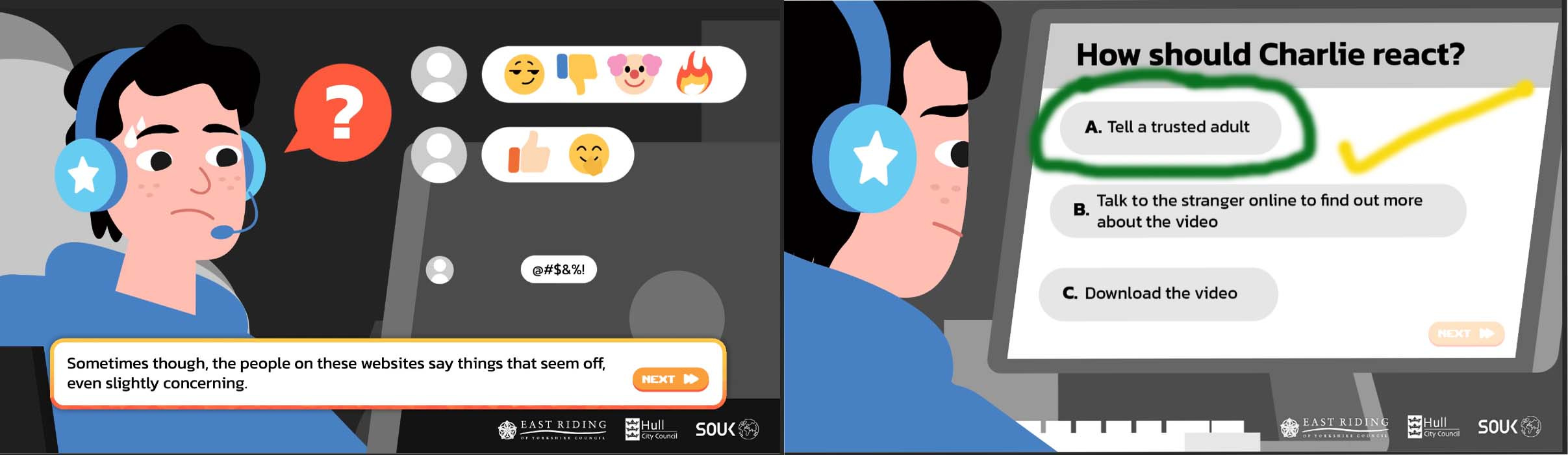
How old do you think Charlie is that the right option to something troublesome online is: tell a trusted adult? If you said fourteen, you would be WRONG!
Charlie is in college. That’s right. He is a college student. Probably over eighteen. Legally, an adult.
But Pathways’ solution is not that he should learn how to figure out matters on the internet, no. Their solution is that he should put aside his own judgment and ask a trusted adult….as if he were ten.
Stage Two: Charlie is taking a class at college called Hospitality. He is not doing as well as he would like. Also, he fails to get a job. His classmate, Amelia—the goth chick with lavender hair—suggests that immigrants are taking their jobs. Here are the options:
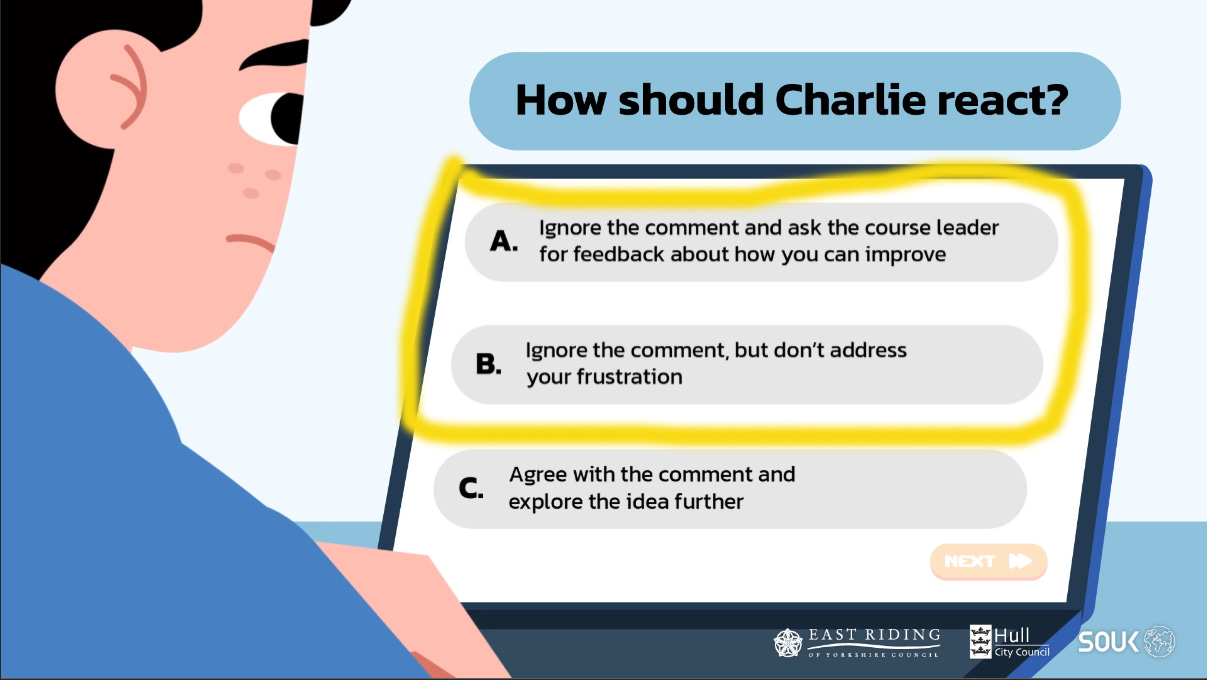
If you pick agree with Amelia, Charlie immediately starts shouting and is put in the corner by himself due to the things he said. Do they really send college kids to time out?
(When this all first came out, I watched several different people play this game for the first time, not knowing what it was about, and ALL the men immediately wanted Charlie to date Amelia. )
Note that the good option is, again, to go talk to an adult. Trying to solve your issues on your own is a middle-to-bad answer, because we will learn later that Prevent, the British organization that is supposed to be stopping terrorism, to which Charlie will get referred if he stays on the middle path, believes that frustration is one of the things that leads to extremism. So frustration is verboten.
Stage Three: Charlie watches a video and learns:
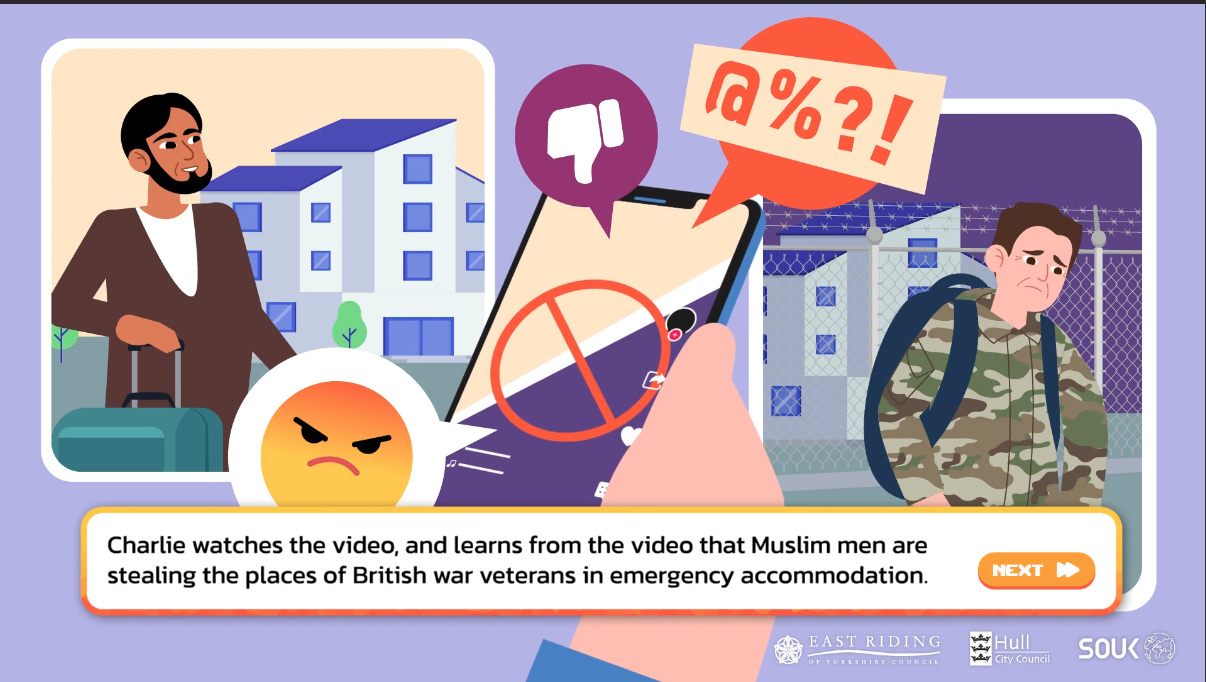
A few years ago, a veteran named Malcolm Livingston froze to death because his request for shelter was denied. After his death, it turned out that he had been one of the coffin-bearers for Princess Di and had worked in Buckingham Palace for the Queen. Nothing I looked at explained why his request had been turned down. He may not have even lived in an area with a lot of immigrants. But I had just read about this when I first came upon this game…
I do know that “Welfare Tourists,” as they call them, are being put up in hotels in England, and many say that the money being used for this was meant for veterans.
Carl Benjamin, when playing this game, seemed to think that this was merely a true statement about the state of things in the UK.
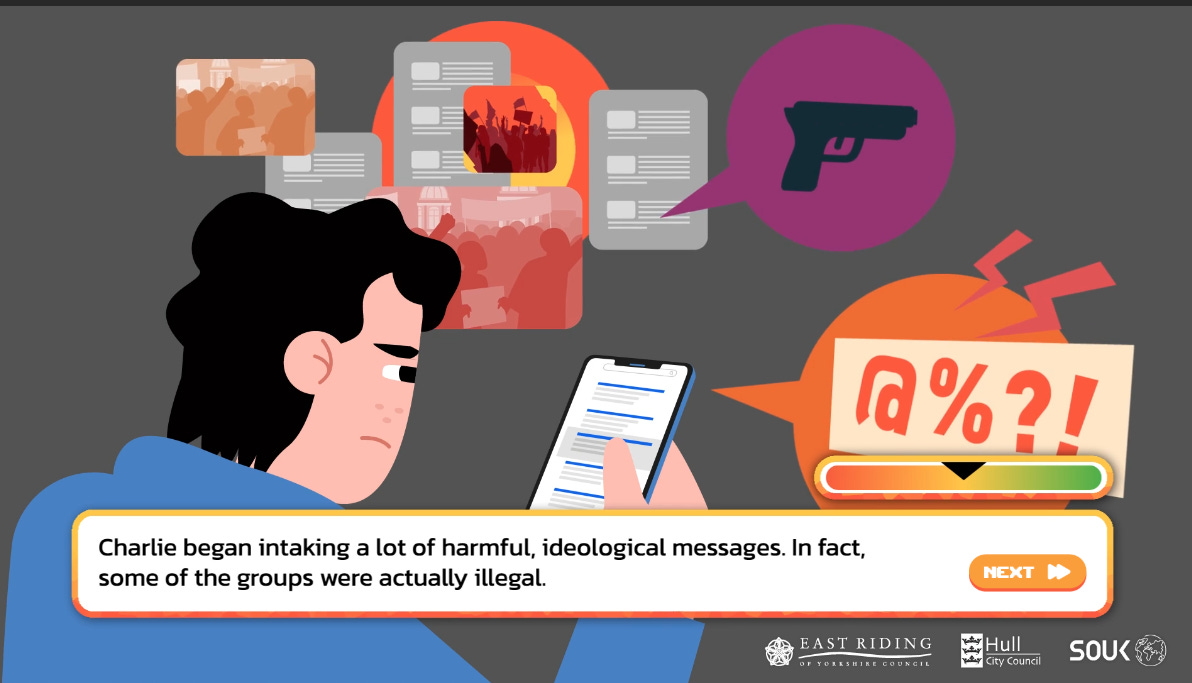
Below is the outcome if you pick the middle path of “find out more” rather than “Scrolling by” a video. Notice, there is nothing about truth or falsehood here.
Stage Four: Charlie’s mother is also they/them (but Amelia gets to be she/her.)
Here, Charlie is having dinner with his mother and sister, and he gets a message from Amelia:
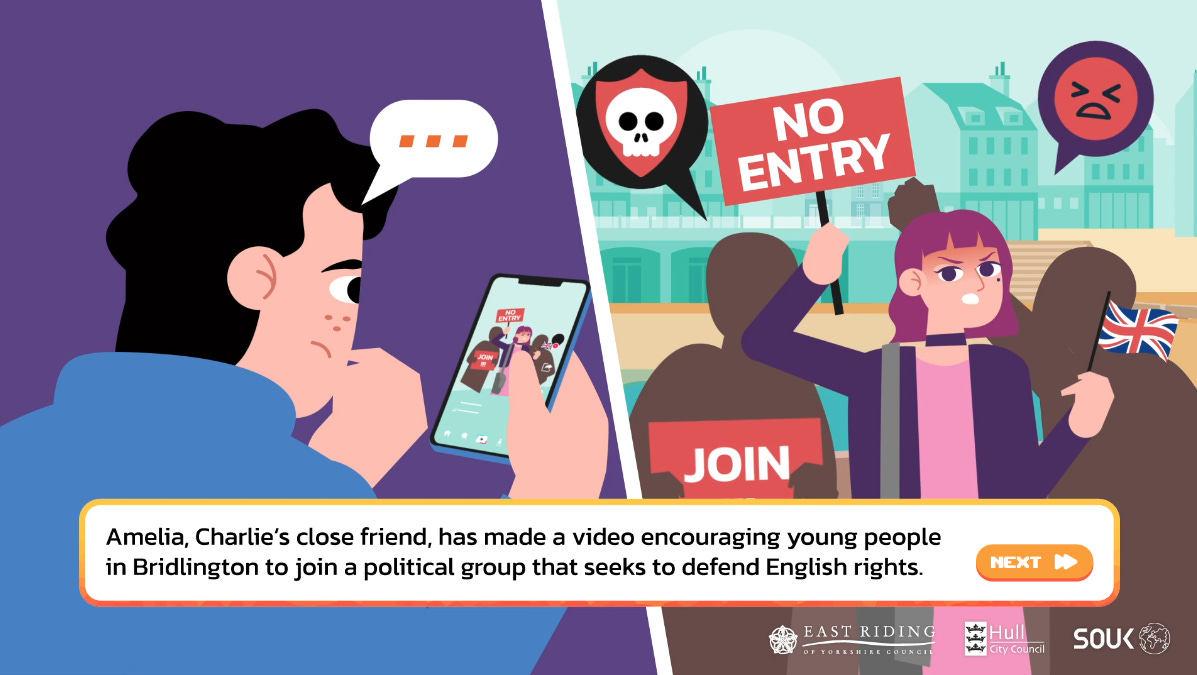
She wants him to join a secret group, too.
His options are: join, like the video but don’t join, or ignore the video. If he ignores it, Amelia disses him the next day.
NOTE: Amelia dissing you and leaving with two other friends is the only event that happens to you if you pick the “good” option every time.
If he likes it to show support to Amelia without joining the group, Charlie gets added to the secret encrypted group without being asked. If he joins the group, he has basically the same experience as if he merely likes the message.
If he does it on purpose, though, his mother objects:
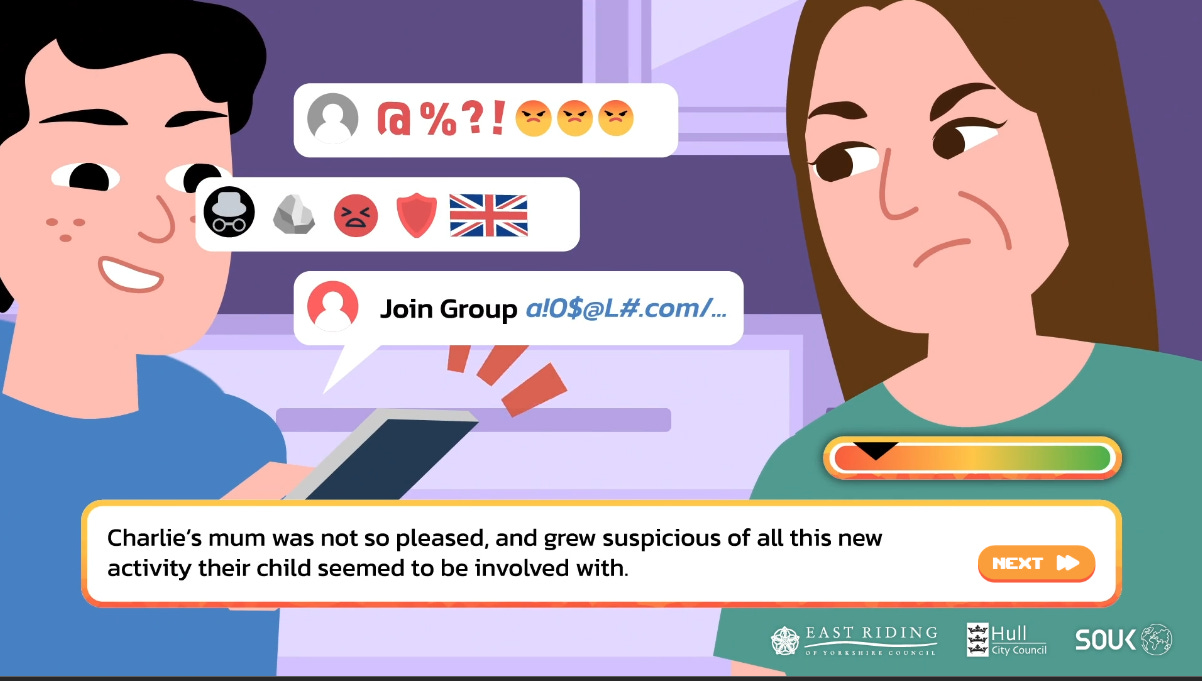
Again…how old is Charlie? Not that parents can’t worry about college-age kids, we do, but…one really gets the sense that the people who made this game were picturing a young teen, not a legal adult.
Stage Five: Charlie is having lunch with Amelia—NO MATTER what you did before. So if you didn’t like the message, and Amelia blew you off and went off with other people, you are not perfectly good friends again and having lunch, just the same as if you had joined the secret group willingly.
Really sloppy game play.
In stage five, Charlie is going to visit his father, who lives elsewhere. Amelia wants him to go to a protest in that area. If he goes, he gets in trouble. If he does not:
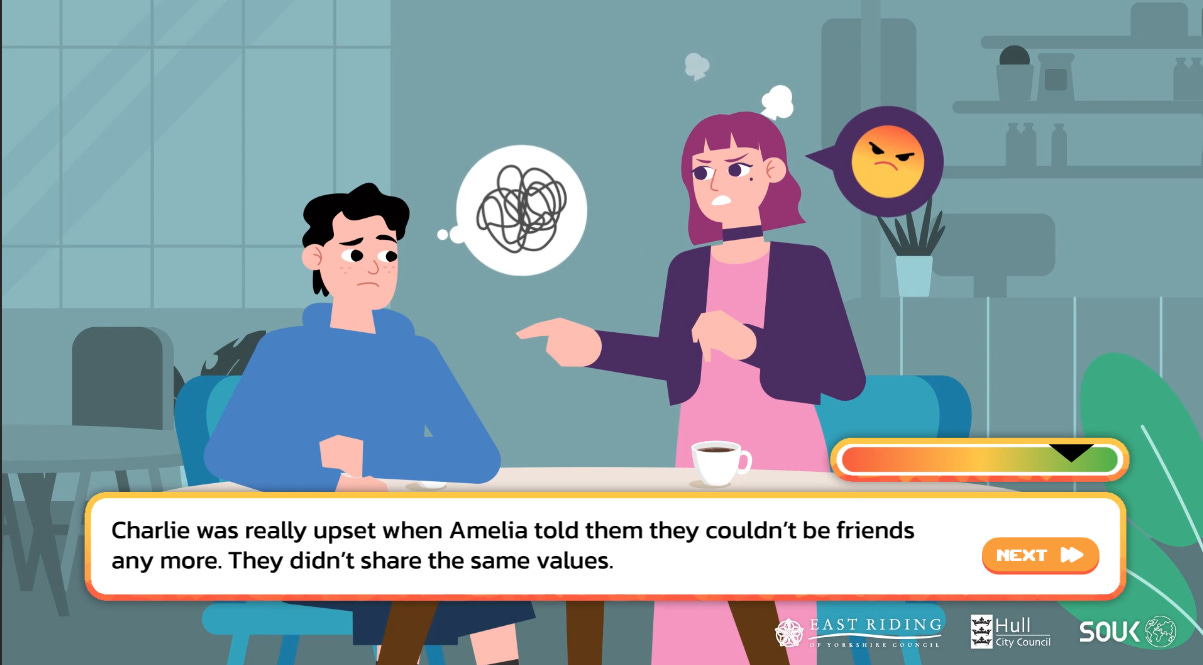
As a gentlemen called James said on Twitter (X):
Well, as we all know, nothing appeals to young men like losing the interest of sexually attractive women in their peer group, so good job British game designers!
If he agrees to go, either to protest or to observe, however, he gets this:
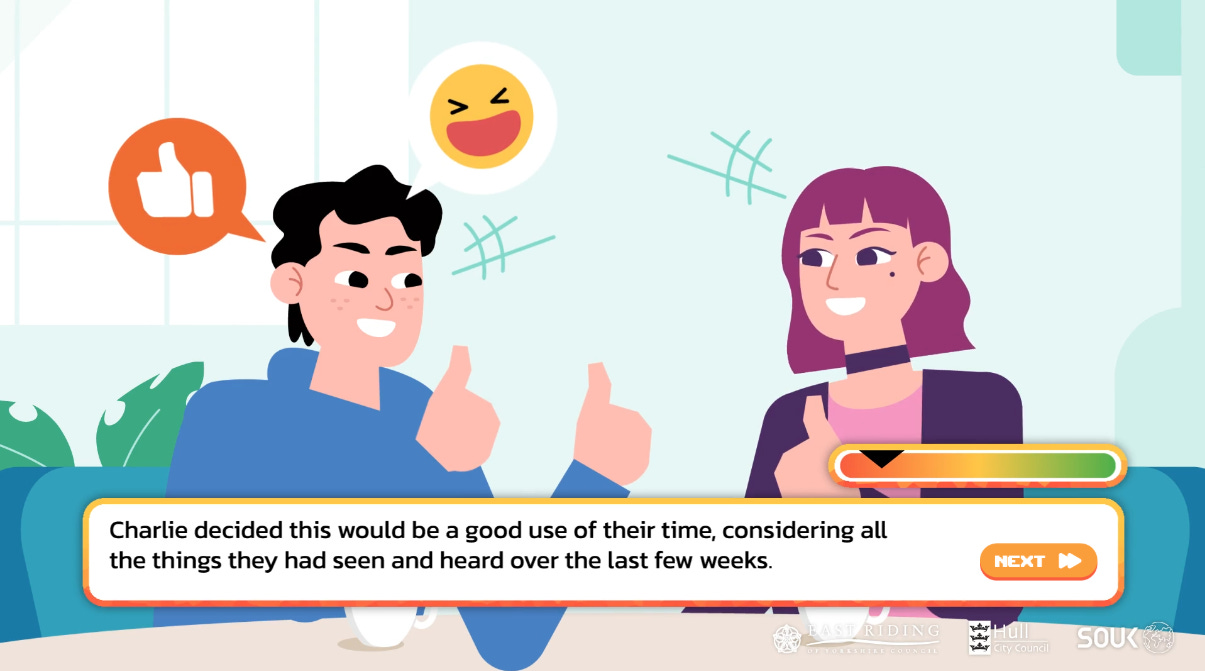
Here is a place where use of they is confusing. You can also see Charlie’s Crossed Swords flag.
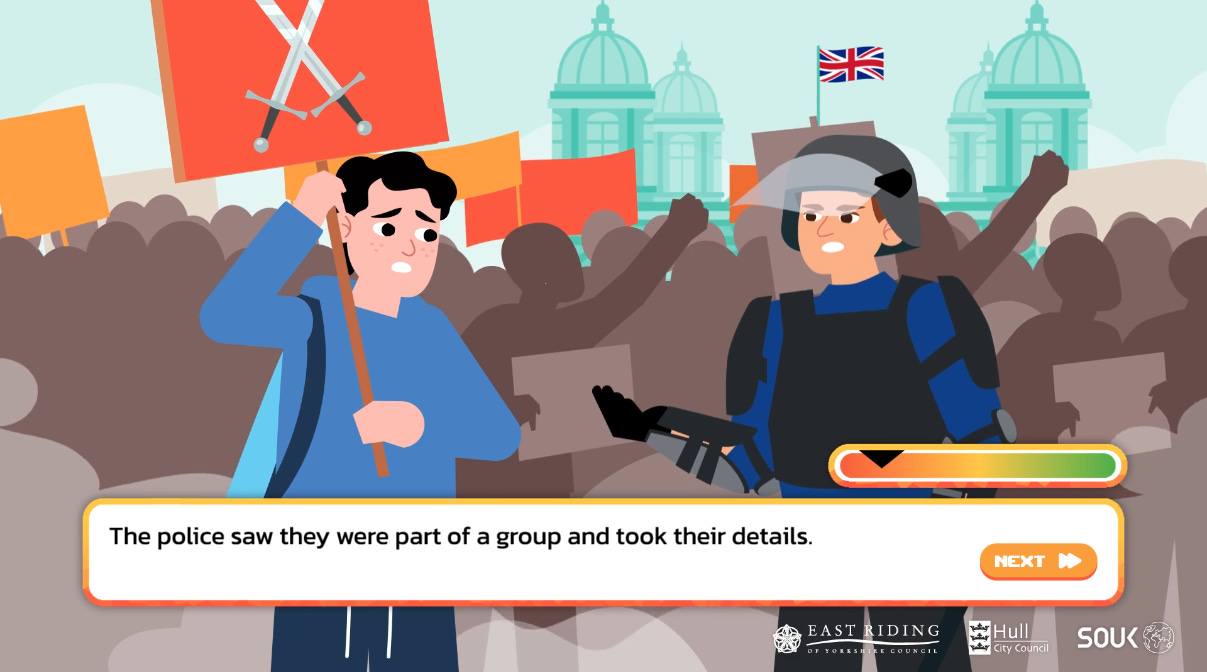
Stage Six: This stage originally had different things that could happen, but now it gives you this…even if you did the things Amelia liked and were on perfectly good terms with her a few minutes ago:
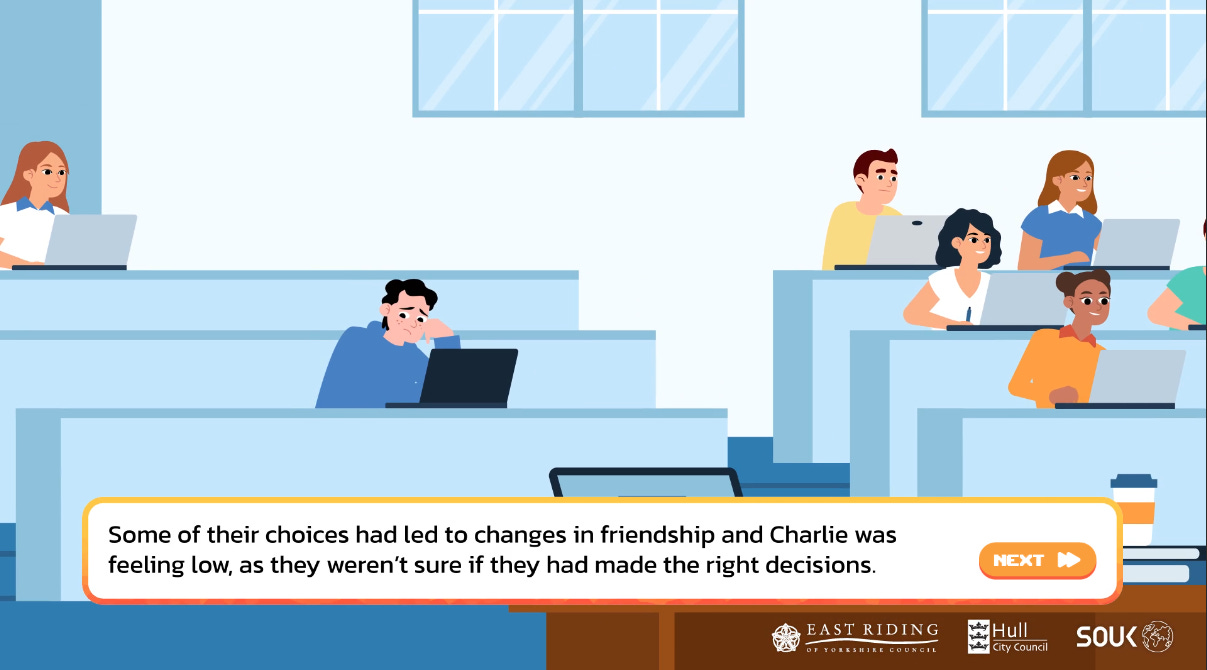
Followed by:
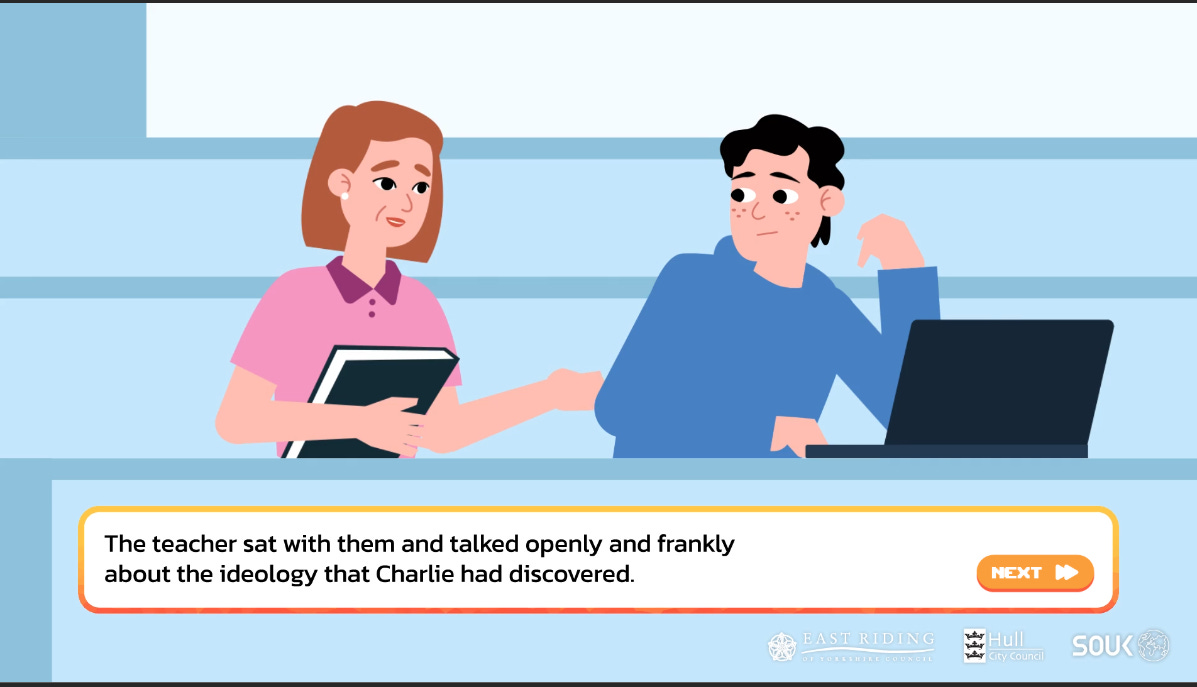
Anyone else skeptical about how open and frank this discussion is?
But they then give you the ability to see what would have happened if you had picked other options…or do they? Because the only option after that is:
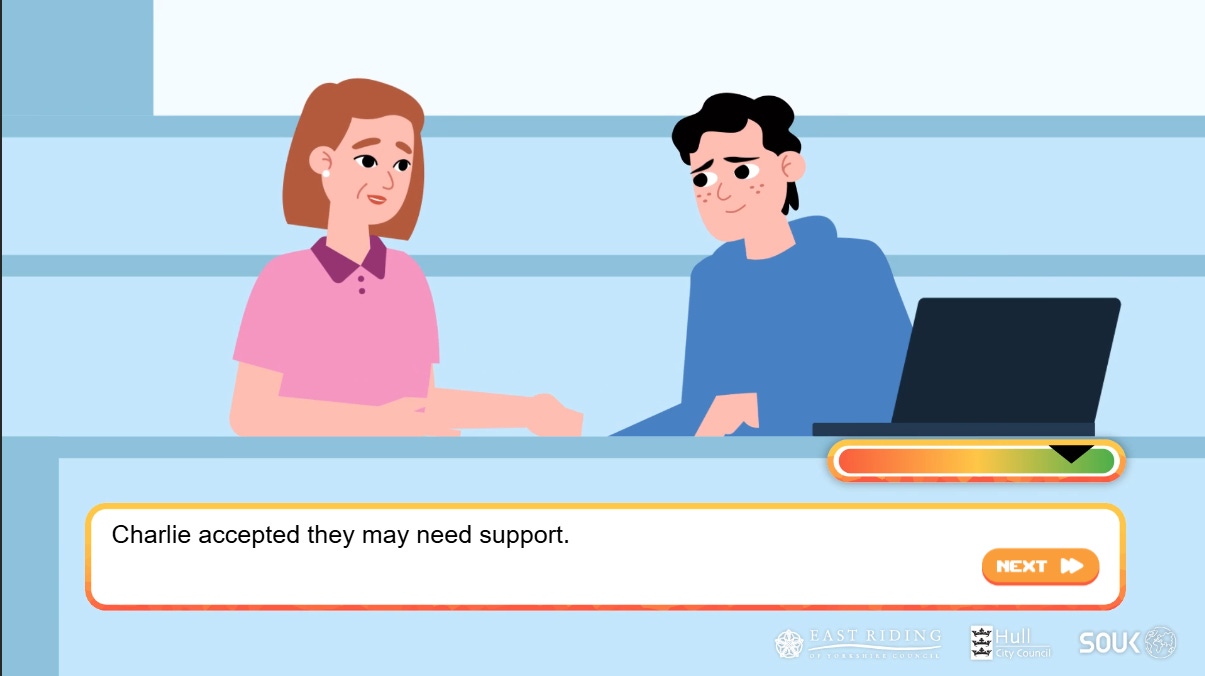
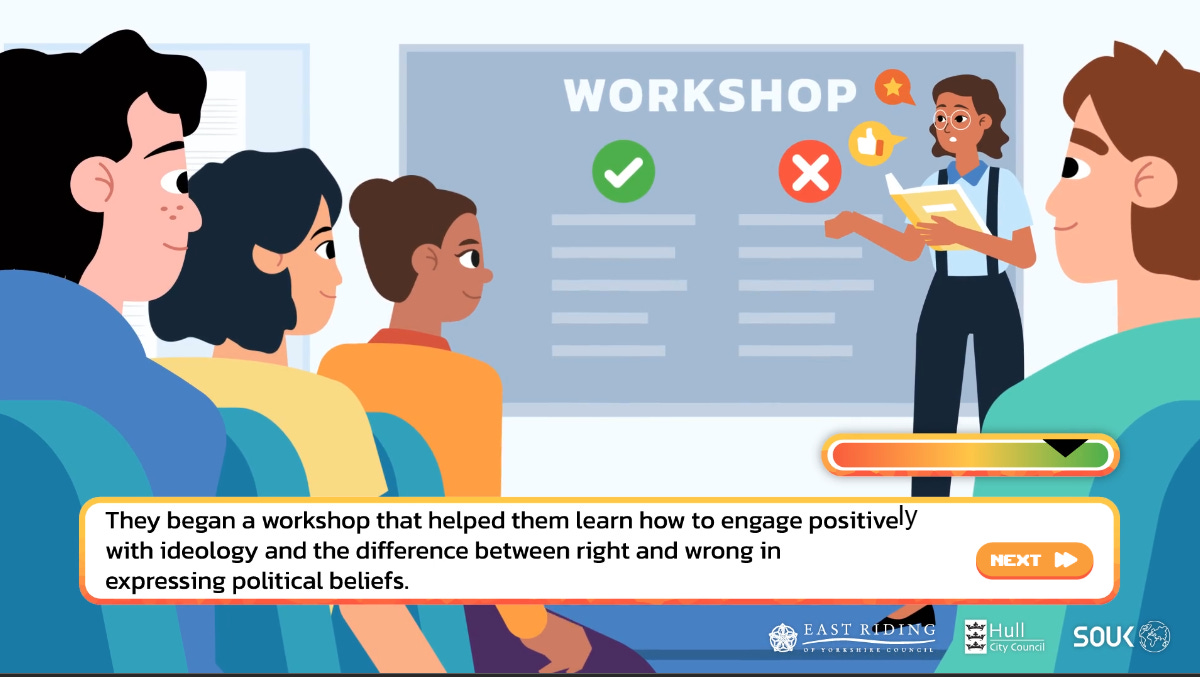
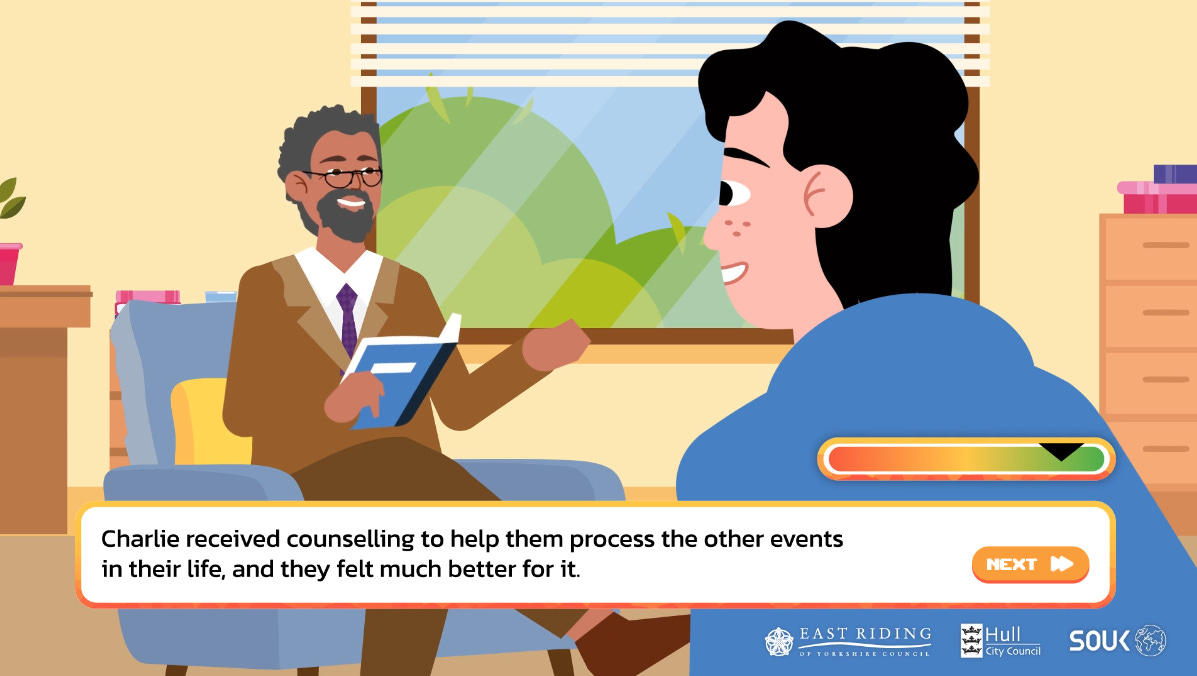
Then follows a video about Prevent and what happens to Charlie if he gets reported to them:
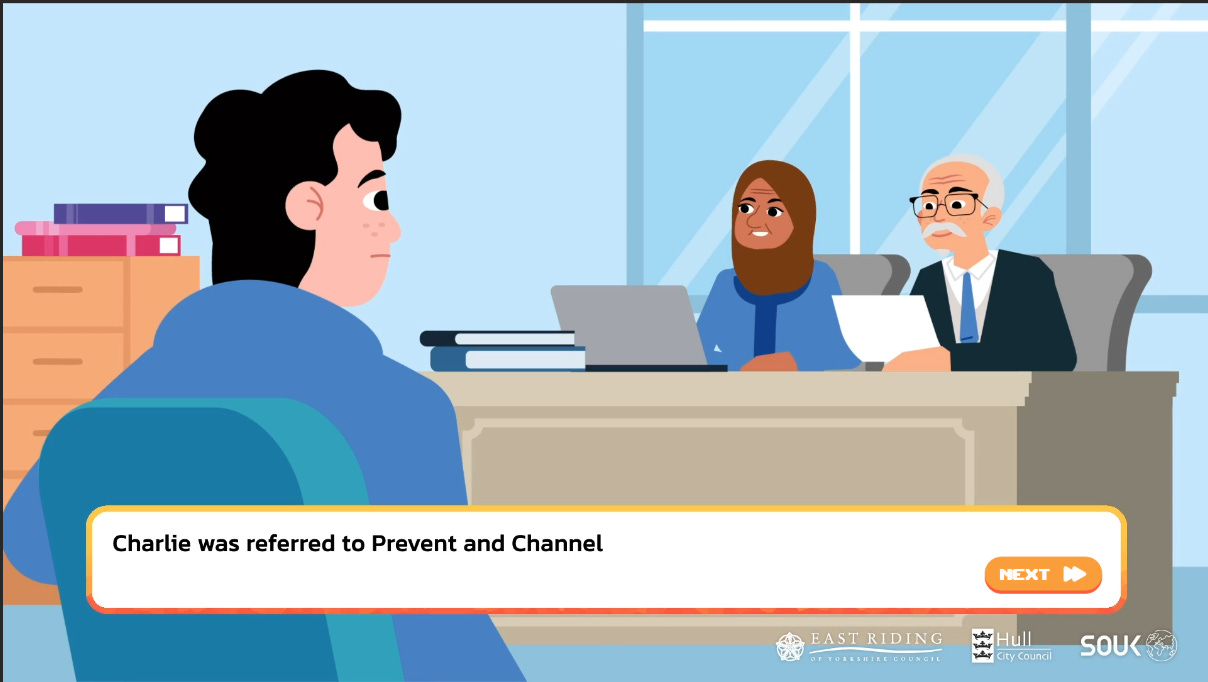
They removed the ending where you and Amelia get arrested, and they only give you the middle way/you go for counseling ending as an afterthought of “check out what could have gone wrong.”
So what was my impression? Every choice, every option, every emotion is a feminine one. Talk about your feelings. Seek out authority. Worry about your emotions. These are all feminine things. And Charlie’s gentle, wide-eyed way of dealing with everything is a very feminine way to approach life.
Even Charlie getting angry and shouting in class about the ideas Amelia shares with him is like a women’s idea of what men are like, rather than like what a real man would tend to do.
No one would want a young man in college to act this way. Well, no one sane.
One can almost hear the voice of Mr. Banks from Mary Poppins saying, “Slipshod sugary female thinking.” Only, this time, my sympathies are with him.
The version where you play female Charlie at least kind of makes sense.
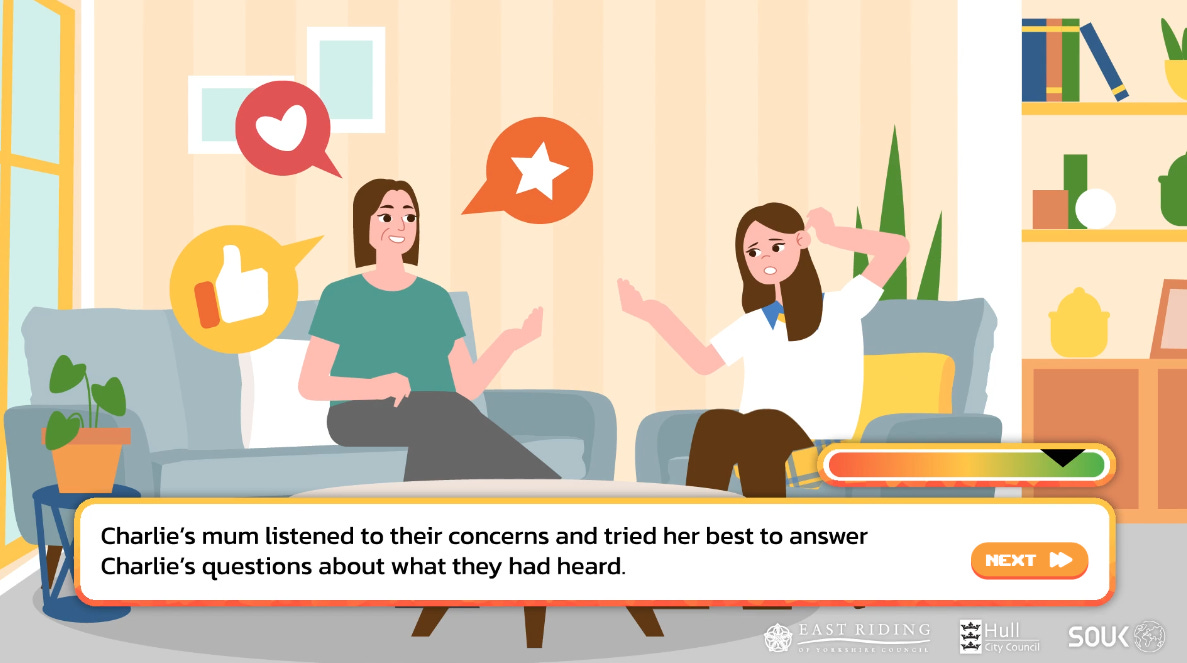
But even a young woman in college should at least be encouraged to figure things out for herself, to think about them, and use wisdom.
This kind of thinking seems to be rampant throughout our nanny culture, an emphasis on nice DEI people telling us what to do, while we just take their word for it.
Playing Pathways feels like something from 1984 or Brave New World…where people are sent to Prevent for therapy and reprogramming. One gets the feeling of a culture where people who really do need to be kept from committing violent agressive crimes are ignored, while people who “tweet rudely” are sought out and reported by their busybody neighbors or overzealous classmates.
But at least one good thing came from it. It gave us Amelia:

Nerfed = they censored their own propaganda.
That's something.
The culture of "nudging" with government power and gone full steam ahead.
Anyway, I still think about this snippet of an interview I watched that goes how therapy for men needs to be different for therapy for women.
https://youtu.be/5yyWlp6sTv0?si=V0D_OS5K0QXicpv7
Like you pointed out, Pathways seems in every way to be a proof of his points.
(also mary poppins was screenwashing! lol)
https://www.youtube.com/watch?v=9qHild2_vOI